

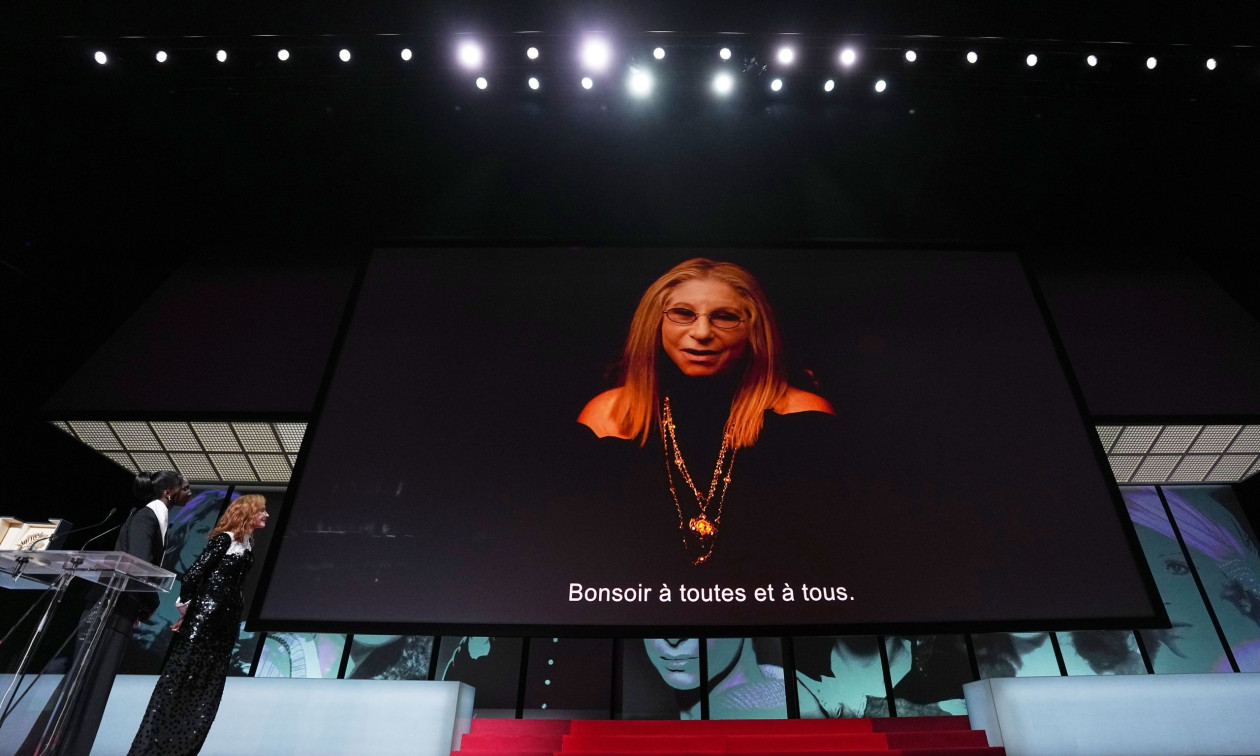
It’s May 23, 2026. The French Riviera is buzzing. The 79th Cannes Film Festival has just wrapped after 12 gloriously pretentious days. More than 40,000 film professionals have descended upon this tiny coastal city. They’ve watched 22 films in competition. They’ve argued. They’ve cried. They’ve given standing ovations that lasted longer than some of the films themselves.
And now? Now begins the annual ritual where we look at what won at Cannes and say, “Ah yes, that’ll be up for an Oscar.”
Because here’s the thing about Cannes and the Oscars: they’re dating. Not officially, but everyone knows. Last year’s Cannes batch included Sentimental Value and The Secret Agent. The year before that? The Substance, Emilia Pérez, and Anora. You know, just a few little indie films that nobody’s heard of.
So grab your popcorn, your best French accent, and your strongest opinions. Here are the nine films from Cannes 2026 that could end up holding little gold men next year.
1. Fjord – The Palme d’Or Winner That Everyone Hates (Or Loves. Nobody Can Decide.)
Let’s start with the big one.
Fjord won the Palme d’Or, Cannes’ top prize, the equivalent of Best Picture but French and therefore automatically more sophisticated. It’s directed by Cristian Mungiu, who previously won the Palme d’Or in 2007 for 4 Months, 3 Weeks and 2 Days. He’s now the 10th director in history to win the prize twice. Fancy.
The film stars Sebastian Stan and Renate Reinsve as an evangelical couple who move from Romania to a remote Norwegian village with their five children. The family’s deeply conservative religious beliefs clash with progressive Norwegian laws. When their eldest daughter shows up at school with bruises, the authorities launch an investigation into their parenting methods. The parents admit to slapping their children as discipline – perfectly normal in Romania, deeply illegal in Norway.
The film received a 12-minute standing ovation, one of the longest at the festival. But here’s the twist: the critics are completely, spectacularly divided.
Variety’s Guy Lodge called it “masterful” and said it “sharply captures the conflicts and misunderstandings of the modern world.” ScreenDaily’s Lee Marshall argued it “lacked a sufficiently strong climax.” The Guardian’s Peter Bradshaw gave it 2 out of 5 stars and called it “lacking emotional weight.”
Mungiu himself summed it up perfectly at the press conference: “We need to respect each other and leave children with a less violent society.”
Oscar potential: High. The film tackles the hottest of hot topics – religion, parenting, cultural clashes. The Academy loves movies that make them feel smart and uncomfortable at the same time.
2. Minotaur – The Grand Prix Winner That Should Have Won The Palme (According To Everyone Who Lost)
Minotaur won the Grand Prix, the second most important award at Cannes. And before Fjord was announced, many experts predicted Minotaur would take the top prize. So this is essentially the runner-up. The bridesmaid. The “we liked it but not enough to give you the trophy” award.
Directed by Andrey Zvyagintsev, whose previous films have been Oscar-nominated, Minotaur is a remake of Claude Chabrol’s The Unfaithful Wife (1969). But Zvyagintsev has moved the story to a Russian city and added a sharp political edge. The husband is an oligarch enjoying a life of luxury while his employees are sent to fight in Ukraine.
The film is described as “Hitchcockian, tense, richly characterised, and deliciously dark”. It’s also, apparently, “gripping and accessible”, which for a Zvyagintsev film is like saying a polar bear is “slightly chilly.”
Oscar potential: Very high. Zvyagintsev has been nominated before. The political angle is timely. And the Academy loves a good remake that’s not really a remake.
3. Club Kid – The Anora of 2026 (But Gayer)
Club Kid was one of the few American films at Cannes this year. It’s written, directed, and starring Jordan Firstman (you might know him from I Love LA). The plot? A party animal’s life is upended when he’s presented with the 10-year-old son he never knew he had.
The film premiered on May 15 and received a six-minute standing ovation. Then things got interesting. Firstman kissed his co-star Diego Calva during the celebrations. The video went viral. Social media lost its collective mind. “Is Diego even gay?” people asked. “A six-minute Cannes ovation AND a celebratory kiss?? Oh, ClubKid just entered its indie cult classic era instantly,” someone else tweeted.
The film has been called this year’s answer to Anora. It has the same producer, Alex Coco. It’s a “rollicking, New York-set indie comedy that bursts with raunchiness and caustic wit, but is big-hearted too.”
Oscar potential: Moderate. It probably won’t win Best Picture like Anora did, but expect nominations in acting, screenplay, and possibly a “wait, this is actually really good” surprise.
4. La Bola Negra / The Black Ball – The Spanish Epic That Made Everyone Cry
Directed by Javier Calvo and Javier Ambrossi – aka “Los Javis” – this Spanish saga is described as having “sweeping scale, lavish period detail, wrenching emotion, and literary cleverness.” It cuts between three narratives – two in the 193s and one in 2017 – examining how gay relationships have been erased from history in Spain.
The film received a 13-minute standing ovation, one of the longest of the festival. The critical response has been rapturous. The New York Times’ Kyle Buchanan called it a future Oscar contender “in all categories.” Variety’s Guy Lodge praised its “narrative and stylistic maximalism.” The Hollywood Reporter called it “a dazzling blend of contemporary pop sensibility and classic cinema.”
It features memorable cameos by Penélope Cruz (as a music-hall bombshell) and Glenn Close (as a pioneering academic). The wartime scenes are reminiscent of The English Patient and Captain Corelli’s Mandolin.
Oscar potential: Extremely high. International feature. Best supporting actress for Cruz. Possibly Best Picture if the campaign is strong. Spain’s official submission? Almost certainly.
5. Soudain / All of a Sudden – The Three-Hour Tearjerker That Will Ruin Your Day
Ryusuke Hamaguchi’s Drive My Car won the Oscar for Best International Feature in 2022 and was nominated for Best Picture. So when he makes a new film, people pay attention.
All of a Sudden is set in Paris. Virginie Efira plays the director of a nursing home who meets Tao Okamoto, a Japanese playwright with terminal cancer. And here’s the kicker: it’s three hours and sixteen minutes long. Including a 30-minute lecture on the demographic effects of capitalism.
Yes, you read that correctly. A half-hour lecture. On demographics. In French and Japanese. With subtitles.
The Best Actress award was shared between Virginie Efira and Tao Okamoto for their performances in this film. And despite the daunting runtime, critics say viewers who stick with it will be “sobbing by the end.”
Oscar potential: Moderate-to-high. Hamaguchi has the track record. The Academy loves a good cry. But three hours and sixteen minutes is a hard sell for voters who have twenty other films to watch.
6. The Man I Love – Rami Malek’s Comeback (With Tears)
Rami Malek hasn’t given awards voters much to focus on since he won his Oscar for Bohemian Rhapsody in 2019. The Man I Love changes that.
Set in New York in 1984, Malek plays Jimmy George, a beloved queer entertainer living with AIDS who refuses to stop working. He’s determined to mount one last theatrical production as time runs short. Tom Sturridge plays his devoted partner. Luther Ford plays a younger neighbor with whom he has a simmering affair.
The film received a seven-minute standing ovation at its premiere. Malek, making his Cannes debut, seemed overwhelmed. His eyes filled with tears as the audience applauded. One genuine showstopper involves Malek mournfully singing Melanie’s 197 B-side, “Look What They’ve Done to My Song, Ma,” to his family.
The film is only 95 minutes long, a blessed relief after All of a Sudden. Directed by Ira Sachs, whose last several films have received Spirit Award nominations for Best Feature.
Oscar potential: High for Malek (Best Actor). Possibly for Supporting Actor (Sturridge). And a real contender for Best Picture if the campaign finds its footing.
7. El ser querido / The Beloved – Javier Bardem Being Terrifying Again
The Academy has a soft spot for films about film-making. And The Beloved is one of the finest examples of that sub-genre.
Javier Bardem plays a prestigious director who hires his own daughter (Victoria Luengo) to star in his historical epic. She’s grateful for the opportunity. But once they’re shooting on location, she learns he’s just as short-tempered with her as he is with everyone else.
The film received an eight-minute standing ovation. The Guardian called Bardem’s performance “his most terrifying since No Country For Old Men.” Variety said “it’s been a while since Bardem had such a direct role in which he could shine,” describing his character as “overwhelming, charismatic, manipulative, ruthless but astutely silent.”
Directed by Rodrigo Sorogoyen, who is quickly becoming one of Spain’s most exciting filmmakers.
Oscar potential: Very high for Bardem (Best Actor). Possibly for Luengo (Supporting Actress). The father-daughter dynamic will resonate with voters who have complicated feelings about their own parents.
8. Moulin – The Grindhouse WWII Movie You Didn’t Know You Needed
László Nemes won the Oscar for Best Foreign Language Film in 2016 for Son of Saul. His new film, Moulin, is another gruelling, atmospheric chronicle of World War Two.
Based on the true story of Jean Moulin, a French Resistance leader who is arrested in Lyon and interrogated by the loathsome Gestapo commander Klaus Barbie. Gilles Lelouche plays Moulin. Lars Eidinger plays Barbie.
Shot on 35mm film with an innovative “bleach bypass” process that gives it a distinctive, gritty look. The same team worked on Poor Things, The Brutalist, and Maria, so you know the craft will be impeccable.
Oscar potential: High for International Feature. Also a strong contender for Cinematography and Sound. It’s not an easy watch, but the Academy loves a worthy struggle.
9. Notre Salut / A Man of His Time – The Banality of Evil, French Style
Emmanuel Marre’s drama is a biopic of his own great-grandfather, Henri Marre. After the German conquest of France in World War Two, Henri keeps knocking on doors until he gets a bureaucratic job in Marshall Pétain’s Vichy regime.
He sees himself as a patriot who can rebuild France with his modern management theories. The fact that he’s collaborating with the Nazis and helping to send Jewish citizens to their deaths doesn’t seem to interest him.
Marre drew inspiration from his own family’s correspondence to imagine his great-grandfather’s journey. The film uses naturalistic performances, intimate camerawork, and bursts of 198s music (yes, really) to make the point that the most abhorrent dictatorships can be propped up by the most ordinary people.
Swann Arlaud plays Henri with what Franceinfo calls “justesse” – a quiet, chilling accuracy.
Oscar potential: Moderate-to-high. International Feature. Possibly Best Adapted Screenplay. And a real dark horse for Best Picture if the campaign focuses on the film’s uncomfortable relevance to modern politics.
The Ones That Didn’t Make The List (But Probably Should Have)
Here are two more worth watching:
Coward by Lukas Dhont. A gay romance set during World War One. The Best Actor award was shared between Emmanuel Macchia and Valentin Campagne for their performances in this film. Dhont’s previous film, Close, was nominated for Best International Feature. Expect tears. Lots of tears.
Dreamed Adventure by Valeska Grisebach. 167 minutes of whatever Grisebach wants to make. Her film Western was a critical darling. This one is apparently even weirder. Oscars love weird. Sometimes.
The Verdict (Or: Who’s Actually Winning?)
Look, predicting the Oscars in May is like predicting the weather next Christmas. You’re probably wrong, but it’s fun to try.
Here’s my completely unqualified, definitely-wrong-by-February prediction:
- Best International Feature: La Bola Negra (Spain) vs. All of a Sudden (Japan) vs. Minotaur (Russia – awkward)
- Best Actor: Javier Bardem (The Beloved) vs. Rami Malek (The Man I Love) vs. Sebastian Stan (Fjord)
- Best Supporting Actress: Penélope Cruz (La Bola Negra) – lock it in. Write it down. She’s winning.
- Best Picture: If the Academy is feeling brave, Minotaur. If they’re feeling emotional, The Man I Love. If they’re feeling European, La Bola Negra.
But here’s the real truth. Cannes 2026 gave us something rare: nine films (okay, nine plus a few extras) that are actually worth arguing about. Not bland Oscar-bait. Not safe biopics. Real, challenging, complicated cinema that made people boo and cheer and cry and walk out.
And in an era of superhero sequels and franchise fatigue, that’s something worth celebrating.
Now I need to book a flight to Norway. I have strong opinions about parenting, and apparently that’s the entire plot of Fjord.