

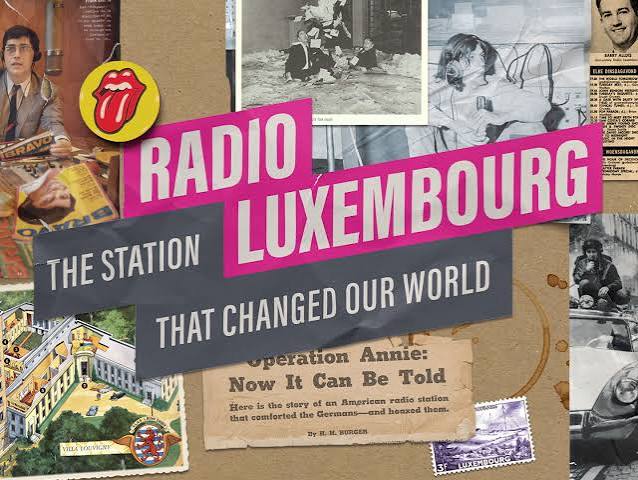
Before the BBC cared about pop music, before pirate radio, before commercial stations, there was only one place a British teenager could go to hear the hits. It was hidden in the static of a medium wave frequency that faded in and out like a ghost. It was Radio Luxembourg, and for millions, it meant everything.
A Signal from the Grand Duchy
Radio Luxembourg began broadcasting to Britain in 1933, but its golden era arrived in the 1950s and 1960s when it became the only commercial pop music station available to British listeners. Broadcasting from the Grand Duchy of Luxembourg on 208 metres medium wave, the station reached an estimated 78 million nightly listeners at its peak.
The signal was famously unreliable. It would fade in and out, crackle and drift, so listeners had to keep adjusting their dials. That imperfection became part of the ritual. As one retrospective put it, this was “a radio station, broadcast on an extremely poor frequency, but loved by millions of music fans”.
The station’s English service usually began broadcasting in the evening, which created a unique listening culture. Teenagers across Britain would wait until their parents were asleep, then tune in under the covers.
Under the Bedclothes
“Under the bedclothes” became the defining phrase of the Radio Luxembourg experience. With tiny Japanese transistor radios pressed to their ears, young listeners would hide beneath blankets, straining to hear the latest chart hits through the static.
One listener remembered: “My transistor was a kind of beige colour. My grandmother had one that was bright red. I never saw her listen to hers but I doubt she just kept it for show”.
The ritual was often tinged with a bit of rebellion. Parents would find the radio still tucked under the pillow in the morning. Mothers would sneak in to retrieve it. But the music had already been heard, and that was what mattered.
The station also reached far beyond Britain. Listeners in Poland, Czechoslovakia, and across Europe tuned in despite government restrictions and poor reception. “It was fading, but after midnight propagation was getting better and party was on,” one Eastern European listener recalled decades later.
The DJs Who Became Stars
Radio Luxembourg was the launchpad for some of the most famous voices in British broadcasting. The station was known as “the station of the stars,” and its DJs became celebrities in their own right.
David “Kid” Jensen, who joined in 1968 at just 18 years old, later said that being a DJ on Radio Luxembourg was “a bit like joining the Beatles” because there were so few opportunities to do that kind of work. He described the station as making a “massive impact” on the lives of people “desperate for entertainment”.
Paul Burnett, who worked at the station from 1967 to 1974, called landing the job “the Holy Grail.” He remembered listening to Pete Murray and Jimmy Savile as a boy, never dreaming he might one day take their place. “All the DJs I’d admired… were almost mythical figures, they came out the radio but I never dreamt that one day I might do that job”.
Tony “Your Royal Ruler” Prince pointed to the station’s real innovation: “This station brought the concept of the personality DJ. There was nothing for teenagers, and a lot of what the BBC did was very dry”.
In the early 1970s, the station assembled its famous “Big Six” lineup: Mark Wesley, Dave Christian, Tony Prince, Paul Burnett, Kid Jensen, and Bob Stewart. For listeners, finally seeing photographs of these voices in magazines like Record Mirror was a revelation.
The Fading Signal
The station’s dominance began to erode in the late 1960s. Pirate stations like Radio Caroline and Radio London offered better reception and a more rebellious spirit. Then in 1967, the BBC finally launched Radio 1, though it initially lacked the personality and energy of Luxembourg.
But even Radio 1 couldn’t fully compete. As one listener noted, Radio 1 went off air at 6pm in its early years, leaving teenagers with nothing but Radio 2’s “old fashioned output” until John Peel came on at 10pm with music that was “very niche and not to every young person’s taste”.
So for several hours each evening, there was still only one option: wait for Luxy to fade in around 8:30pm.
The arrival of Independent Local Radio in the mid-1970s marked the beginning of the end. The abolition of needle-time restrictions in 1987 further eroded the station’s unique position. The medium wave 208 service closed at the end of 1991, with the station limping on via satellite until December 1992.
The Last Night
The final broadcast came on 30 December 1992. Jeff Graham was at the microphone. The last songs played were Van Morrison’s “In the Days Before Rock ‘n’ Roll,” Neil Sedaka’s “Our Last Song Together,” and finally Marion Montgomery’s “Maybe the Morning”.
It was a quiet ending for a station that had meant so much to so many. One listener summed up the feeling: “When I came visit my mother country after so many years and found out that 208 is down, it was like closing down part of my youthful years”.
The Legacy
Radio Luxembourg never returned to its former glory, but its influence is impossible to overstate. It proved that there was a vast audience for pop music radio at a time when the BBC refused to serve it. It created the template for the personality DJ. And it gave generations of British teenagers a secret world they could access only in the dark, through the static, under the bedclothes.
As one forum poster put it: “There has been nothing as yet to beat the great 208”.
The frequency may be silent now. But for anyone who ever lay awake with a transistor radio pressed to their ear, waiting for a favourite song to emerge from the crackle, 208 will always be the sound of being young.
LA WOMAN – LISA ROTH