

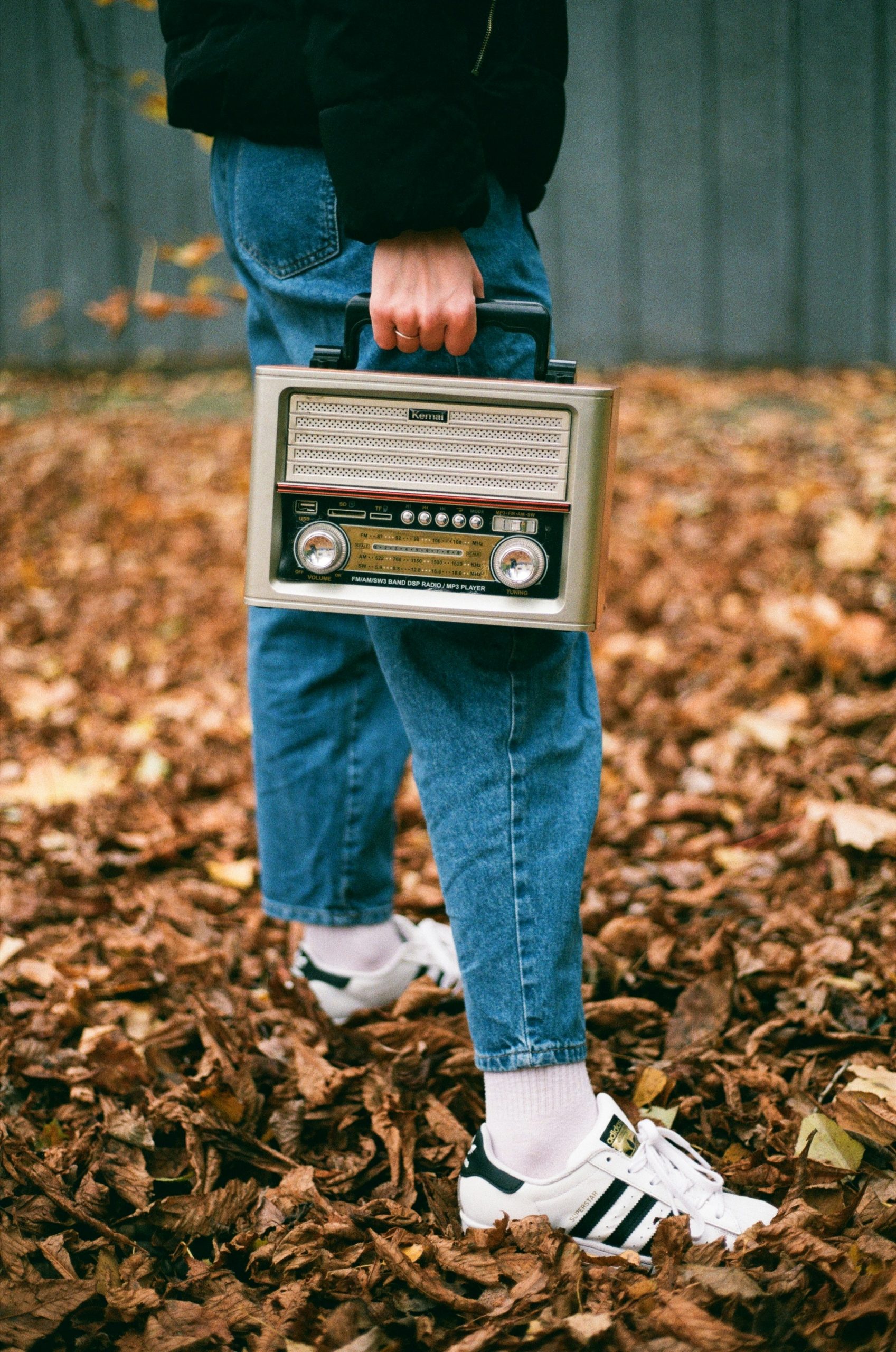
Here’s a confession: still have a dusty radio in my kitchen. It crackles when the toaster goes off, picks up about three stations with any real clarity, and has a preset button I’ve never managed to change. According to everything I’m about to tell you, that little beige box and I are part of a dying breed, like fax machines or people who still buy DVDs.
Because here’s the staggering truth about what’s happening across the United Kingdom right now: nearly 75% of all radio listening happens on digital or online platforms. Not FM. Not AM. Digital. That means smart speakers, phone apps, laptops, and car dashboards that look more like spaceship cockpits than old-school dashboards.
The UK government noticed this shift enough that they launched a major review in February 2026 to decide whether they should start turning off the FM signal entirely sometime in the 203s. Yes, really. The switch-off that people have talked about for years is suddenly looking very real.
But before we mourn the death of the wireless, let’s get one thing straight: people are listening to radio more than ever. Nearly 50 million of us tune in each week, spending over 20 hours with our headphones on or speakers humming. Radio isn’t dying. It’s shape-shifting.
So what are we actually listening to? And why does it matter?
The Heavyweight Champion That Won’t Quit
Let’s start with the obvious. If the UK radio industry were a boxing match, BBC Radio 2 would be the aging but beloved champion who keeps winning despite everyone predicting their retirement.
The latest RAJAR figures (that’s the official radio ratings body, for the uninitiated) show Radio 2 pulling in a staggering 12.71 million weekly listeners. To put that in perspective, that’s roughly the population of Scotland and Wales combined, all deciding they want to hear Scott Mills play Dolly Parton followed by something from the new Sabrina Carpenter album.
And speaking of Scott Mills, the man who took over from Zoe Ball on the breakfast show, before leaving radio2 he had 6.47 million listeners each morning. That’s more people than watch most prime-time TV shows. At breakfast time. While people are half-awake and spilling coffee on themselves.
The former Radio 1 DJ has managed something quite clever: he’s kept the old guard (your mum, your nan, that bloke from accounts who still wears a suit to Wetherspoons) while pulling in younger listeners who remember him from his afternoon show days. It’s a tightrope walk, and he’s making it look easy.
But here’s the plot twist that the BBC probably doesn’t want you to focus on: Radio 2 has actually lost nearly two million listeners since 2021. Twelve-point-seven million is still enormous, don’t get me wrong, but there’s a slow bleed happening. The question is where those listeners are going.
The New Kings of the Dial (Sorry, the New Kings of the Stream)
This is where things get interesting. Because while Radio 2 is still technically the “most popular single station” in the UK, that label comes with increasingly fine print.
The Heart network—which includes Heart, Heart 80s, Heart Dance, and what feels like about seventeen other Heart-adjacent stations—reaches 12.7 million weekly listeners across its brand. That puts it neck-and-neck with Radio 2, depending on how you count.
The difference? Heart is commercial. It runs ads for car insurance and DFS sofas. And people don’t seem to mind at all.
Then there’s Capital, the self-proclaimed “No. 1 hit music station,” pulling in 9.2 million listeners and reportedly beating BBC Radio 1 in reach, hours, and market share. That’s a genuine headache for the BBC’s youth brand, which has seen Greg James’s breakfast audience dip to 3.87 million, down from over 4 million the previous year.
Smooth Radio isn’t far behind at 7.5 million, proving that “easy listening” is apparently exactly what a stressed-out nation needs. And Classic FM, the undisputed champion of people who want to feel sophisticated while cooking spaghetti bolognese, pulls in 4.4 million.
What’s fascinating is the fragmentation. Twenty years ago, there were maybe five stations that truly mattered. Now? There’s a station for every decade, every mood, and apparently every hairstyle.
The News Junkies and the Culture Vultures
Not everyone wants pop songs and traffic updates. And this is where the intellectual side of British listening really shines.
BBC Radio 4—the station of The Archers, lengthy political interviews, and documentaries about obscure 19th-century poets—grew its audience to 8.92 million in late 2025. That’s up 1% from the previous quarter, which in radio terms is basically a victory lap.
The Today programme, hosted by the likes of Nick Robinson and Mishal Husain, remains the crown jewel of British political journalism, pulling in 5.47 million listeners each morning. That number dipped slightly from the previous year, but let’s be honest: 5.5 million people listening to politicians squirm before breakfast is still a remarkable achievement.
If you look at the BBC Radio 4 schedule from January 2026, the range is genuinely dizzying. One morning, they’re running “Putin and the Apartment Bombs,” a documentary series about the 1999 Russian apartment bombings. Later that day, there’s “Thin on Information? Hair loss drug Finasteride.” Then “Why in the Name of Pierre Novellie: Why Am I British?” It’s highbrow, lowbrow, and middlebrow all at once, and somehow it works.
Meanwhile, BBC Radio 5 Live has seen its breakfast show jump to 1.48 million listeners, up 16% on the previous quarter. That’s Nicky Campbell taking calls about everything from immigration to whether you should let your cat outside at night. The station’s schedule in late January 2026 included the World Football Phone-In, the Six Nations Rugby preview, and Naga Munchetty interviewing big-name guests. It’s chaotic, live, and utterly addictive.
The Disruptors: GB News, Talk, and Times Radio
Now we enter the political battlefield. Because if you think radio doesn’t matter anymore, you haven’t been paying attention to the rise of the news-based talk stations.
GB News Radio—the audio arm of the controversial TV channel—averaged 672,000 weekly listeners in late 2025. That’s down slightly on the quarter but up a staggering 44% year on year. The station has been on a rocket ship, overtaking Times Radio in mid-2025 and showing no signs of slowing down.
Times Radio, by contrast, pulled in 542,000 listeners in the same period. That’s down 10% year on year, a significant drop for a station that launched with serious fanfare in 202. Whether this is a blip or a trend remains to be seen.
What’s particularly interesting is how these stations have carved out different political identities. GB News leans right and is unapologetically provocative. Times Radio tries to play it straight down the middle. And Talk (formerly TalkRadio) has seen its audience fluctuate as it finds its footing.
The broader point is this: people aren’t just tuning in for music anymore. They want conversation. They want argument. They want to hear someone say the thing they’ve been thinking but haven’t said out loud. In an age of algorithmic echo chambers, live radio arguments feel refreshingly human.
How We Listen: The Death of the FM Dial
Remember how I said 75% of listening is now digital? Let me unpack what that actually means for your daily life.
DAB (Digital Audio Broadcasting) is now the most common way people listen, especially in cars. Most new cars don’t even come with FM tuners anymore; it’s all DAB or internet streaming.
Smart speakers (Amazon Echo, Google Nest, Apple HomePod) have exploded in popularity, particularly among younger listeners. You walk into the kitchen, shout “Alexa, play Radio 2,” and within three seconds, Scott Mills is in the room with you. The 2021 government review specifically noted that young people listen to radio “predominantly using smart speakers.”
BBC Sounds—the corporation’s catch-up and podcast app—reported nearly 675 million plays in Q3 2025 alone, with an audience of nearly 4.8 million users. That’s not “radio” in the traditional sense; it’s on-demand, you-can-skip-the-songs-you-hate radio. But it’s still counted as radio listening in the RAJAR figures, and honestly, the distinction is getting blurrier by the day.
The connected car is the new frontier. If your car has a screen and an internet connection (and most new ones do), you can stream any station in the country without ever touching an FM button. The government’s upcoming review is deeply concerned with ensuring “distribution and access to radio is secure for the future” as cars get smarter and connectivity becomes standard.
Why Radio Isn’t Going Anywhere (Even If FM Is)
I want to leave you with something counterintuitive.
In a world of infinite choice—Spotify playlists, Netflix recommendations, TikTok’s algorithm that somehow knows you better than your own mother—radio still matters. Not because it offers more choice. Because it offers less.
You don’t have to decide what to listen to on the radio. You turn it on, and someone else has done the work. That person—the presenter—is (hopefully) entertaining, informed, and slightly chaotic in a way that no algorithm can replicate.
The RadioToday analysis put it perfectly: radio is doubling down on “what algorithms struggle to replicate: live moments, local relevance, and human connection.” You can’t algorithmically generate Nicky Campbell telling a caller they’re talking nonsense. You can’t automate the genuine surprise when Scott Mills plays a song from 1997 that you’d completely forgotten about. You can’t fake the collective experience of a nation listening to the same thing at the same time.
The media minister, Ian Murray, said something similar when launching the government’s radio review. Radio, he argued, “holds a special place in people’s lives,” providing company for the isolated, entertainment for commuters, and news for everyone.
The UK radio industry is on the cusp of its biggest transformation since the switch from medium wave to FM in the 198s and 90s. By autumn 2026, the government review will report back with recommendations that could shape how we listen for the next 30 years.
FM might well be switched off. The crackly kitchen radio might finally go silent. But the voices? The music? The arguments, the phone-ins, the weather updates, and the traffic reports? They’re not going anywhere.
They’re just moving to your phone. Your smart speaker. Your car’s touchscreen.
And honestly? That’s probably fine.
by SAM ROBERTSON
Data sources for this article: RAJAR Q4 2025 figures (published February 2026), DCMS Radio Review press release (February 2026), YouGov Ratings (Q1 2026), BBC Sounds internal data (Q3 2025), and RadioToday analysis of UK listening habits. All figures are the latest available as of May 2026.