

Showbizztoday.com – February 22, 2026
Welcome to the 70th Eurovision Song Contest, ladies and gentlemen. The glitter cannon is loaded, the voting systems are (probably) secure, and the political tensions are, as always, absolutely simmering. If you thought Eurovision was just about sequined capes and key changes that could wake the dead, you haven’t been paying attention for the last seven decades. This year’s milestone anniversary is shaping up to be one of the most dramatic, controversial, and delightfully chaotic editions in recent memory.
Let’s dive into the news so far—and trust me, there’s a lot.
The Host City: Vienna Does It Again
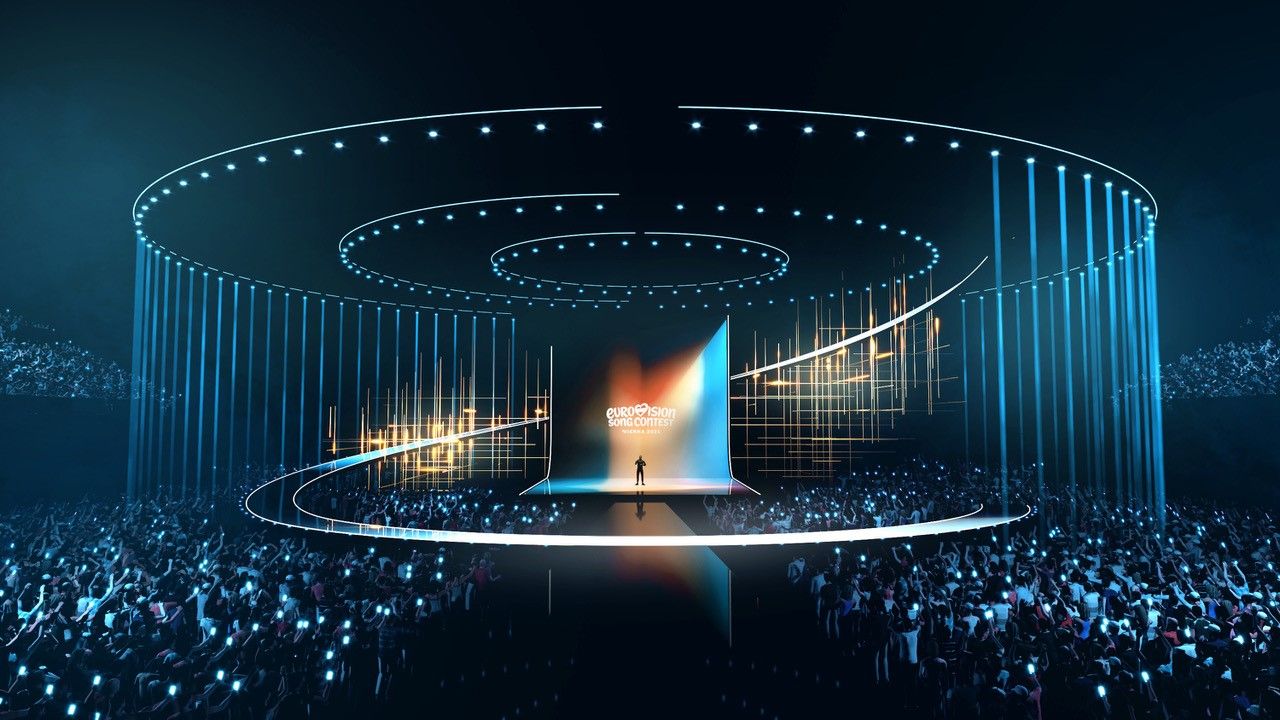
First, the basics. The 2026 contest will take place in Vienna, Austria, marking the third time the city has hosted (after 1967 and 2015). The venue is the trusty Wiener Stadthalle, the same arena that gave us Conchita Wurst’s bearded triumph eleven years ago . The dates are locked in: semi-finals on May 12 and 14, with the grand final on Saturday, May 16 .
The hosts this year are an intriguing pair: Victoria Swarovski (yes, that Swarovski—she’s a singer, presenter, and heiress to the crystal empire) and Michael Ostrowski, a popular Austrian actor and comedian . It’s a classic Eurovision hosting duo: one glamorous, one funny. Let’s hope their chemistry is better than the Wi-Fi at the venue.
The Boycott: Five Countries Walk Out
Now for the part nobody wanted but everyone saw coming. Following the European Broadcasting Union’s (EBU) decision in December 2025 to allow Israel to participate, five countries have officially withdrawn from the 2026 contest .
The boycotting nations are:
- Iceland
- Ireland
- The Netherlands
- Slovenia
- Spain
This ties the record for the largest boycott in Eurovision history, matching the five countries that sat out the 1970 contest following the 1969 four-way tie . At the time, the reason was “voting irregularities.” Now, it’s a war in Gaza that has deeply divided Europe.
The withdrawals have reduced the total number of participating countries to 35, the smallest lineup since 2003, before the introduction of semi-finals . Bulgaria, Romania, and Moldova are returning after absences, which softens the blow slightly, but the absence of Spain (a “Big Five” nation) is a major blow to the contest’s prestige and budget .
Dean Vuletic, a historian specializing in Eurovision’s geopolitics, told AFP: “Eurovision acts as a barometer of European politics, reflecting the spirit of the age. This is the first time we’ve seen multiple broadcasters launch a political boycott over another country’s participation. It’s a serious crisis for the contest” .
The Trophy Returns: Nemo’s Powerful Protest
If you thought the withdrawals were dramatic, wait until you hear what the reigning champion did. Nemo, the Swiss singer who won the 2024 contest in Malmö with their operatic pop anthem “The Code,” announced in December that they are returning their winner’s trophy to the EBU in protest over Israel’s inclusion .
In a poignant statement posted on social media, Nemo said: “This is not about individuals or artists. It’s about the fact that the contest was repeatedly used to soften the image of a state accused of severe wrongdoing, all while the EBU insists that this contest is non-political” .
The gesture was deeply symbolic and sent shockwaves through the fan community. Nemo joins a growing chorus of artists and broadcasters questioning whether Eurovision can truly remain “non-political” when the world outside the arena is anything but.
The Tour That Wasn’t: 70th Anniversary Celebrations Postponed
Here’s the news that broke just last week and broke a lot of fans’ hearts in the process. The EBU had planned a massive 10-city European tour to celebrate the contest’s 70th anniversary, featuring 2026 contestants alongside Eurovision legends . It was supposed to hit London, Hamburg, Milan, Zurich, Amsterdam, Paris, Stockholm, and more .
On February 14 (yes, Valentine’s Day—the EBU really knows how to break up with us), organizers announced the tour’s cancellation.
Eurovision Director Martin Green released a statement: “We regretfully announce that we have made the difficult decision to postpone the 2026 Eurovision Song Contest live tour. We encountered unforeseen challenges. Despite all efforts by our team, producers and promoters, we were ultimately unable to overcome these difficulties” .
Translation? The boycotts, the political pressure, and the logistical nightmare of organizing a tour while five countries are publicly feuding with the organizers made the whole thing impossible. Ticket holders will receive full refunds . It’s a gut punch for fans who were hoping to keep the party going after Vienna.
The Participants: Who’s In and Who’s Singing What?
Despite the chaos, the show must go on. And oh, what a show it promises to be. The lineup of artists so far is a glorious mix of the expected, the unexpected, and the utterly bewildering.
The UK’s Unlikely Champion: Look Mum No Computer
Let’s start with the entry that has everyone talking. The United Kingdom, fresh off years of middling results (and that one time they came dead last with zero points, remember?), has decided to try something completely different. They’ve selected electronic music artist, YouTuber, and self-described “technological innovator” Look Mum No Computer as their representative .
His real name is Sam Battle, and he’s not your typical Eurovision crooner. He builds his own instruments—think organs made from Furby toys, synthesizers powered by bicycles, and keyboards that literally shoot flames. He has 1.4 million followers on social media and even runs a museum called “This Museum Is (Not) Obsolete” dedicated to experimental music technology .
The BBC, in a refreshingly honest statement, admitted that they’ve been criticized for “playing it safe” in recent years, so they decided to “try something different” . They describe his yet-unreleased song as a combination of “Now You’re Gone” by Basshunter, “Parklife” by Blur, “West End Girls” by the Pet Shop Boys, with a pinch of Verka Serduchka and a dash of the Sex Pistols” . If that description doesn’t make you want to watch, nothing will.
Battle himself seems delightfully overwhelmed: “It’s completely surreal for me to be embarking on this wonderful and slightly crazy journey. I’ve always been a huge fan of Eurovision and I love the magical joy it brings to millions of people every year, so it’s a huge honour to be part of it and carry the flag for the United Kingdom” .
The Rest of the Pack
Here’s a snapshot of some other confirmed entries that have caught our attention :
| Country | Artist | Song Title | Notes |
|---|---|---|---|
| Croatia | LELEK | “Andromeda” | Ethno-pop group; music co-written by Serbian singer Zorja (who tried to represent Serbia twice) |
| GREECE | AKLYLAS | “FERTO” | MIGHT BRING GREECE TO NUMBER 1 |
| Georgia | Bzikebi | TBA | They won Junior Eurovision back in 2008—yes, really |
| Luxembourg | Eva Marija | “Mother Nature” | English-language pop with a环保 message |
| Malta | Aidan | “Bella” | Bilingual English/Maltese entry |
| Moldova | Satoshi | “Viva, Moldova!” | Upbeat and unapologetically patriotic |
| Albania | Alis | “Nân” | Albanian-language entry with traditional influences |
Several countries are still in the middle of their national selection processes. Austria (the host) will announce their act this week, Denmark and Estonia on the same day, and heavy hitters like Germany, Finland, and Italy will reveal their choices by the end of the month .
The Semi-Final Draw: Who’s Singing When?
The EBU has already released the semi-final allocations. Here’s how they break down :
First Semi-Final (May 12)
Georgia, Portugal, Croatia, Sweden, Finland, Moldova, Greece, Montenegro, Estonia, San Marino, Poland, Belgium, Lithuania, Serbia, Israel
Second Semi-Final (May 14)
Armenia, Romania, Switzerland, Azerbaijan, Luxembourg, Bulgaria, Czechia, Albania, Denmark, Cyprus, Norway, Malta, Australia, Ukraine, Latvia
The “Big Five” (France, Germany, Italy, Spain, and the UK) plus host Austria are automatically qualified for the final. However, Spain’s withdrawal means they won’t be there at all, so the final will have 25 participants instead of the usual 26 .
Germany and Italy will perform and vote in the first semi-final, while Austria, France, and the UK will appear in the second.
The Political Undercurrent: Why This Year Feels Different
— Eurovision has never been truly apolitical. It was literally founded in 1956 to bring a war-torn continent together through music. But this year feels heavier.
The boycott is the largest in the contest’s history. Nemo’s trophy return is unprecedented. And the war in Gaza, which has now entered its second year, shows no signs of abating. The EBU has stuck to its line that Eurovision is “a non-political event for public broadcasters, not for governments,” but that argument is wearing thin .
Protests have already occurred in multiple countries. In Dublin, demonstrators gathered outside the RTE studios calling for Ireland’s withdrawal (they got their wish). Similar protests happened in Zagreb, where activists demanded Croatia follow suit (they didn’t) .
Swiss historian Dean Vuletic put it best: “We are seeing a contest that is being pulled in multiple directions—by fans who want escapism, by broadcasters who want ratings, by politicians who want leverage, and by artists who want to make statements. Something has to give” .
What’s Next?
The next few weeks will bring a flurry of national final results. By early March, we’ll have a complete picture of all 35 competing acts. Then comes the slow burn toward May: music video releases, promotional tours (well, minus the canceled one), and the inevitable controversies that bubble up every year.
Will the boycotting countries change their minds? Almost certainly not at this stage. Will there be more protests in Vienna? Almost certainly yes. Will the show still be gloriously, chaotically, wonderfully entertaining? Without a doubt.
As one Eurovision fan put it on social media this week: “Eurovision is like a family Christmas dinner. There’s always someone arguing in the kitchen, someone crying in the bathroom, and someone doing something inexplicable in the living room. But at the end of the night, we’re all still singing together.”
The 70th Eurovision Song Contest is going to be unforgettable. Whether that’s for the right reasons or the wrong ones, we’ll find out in May.
by ZOE BOLTON