

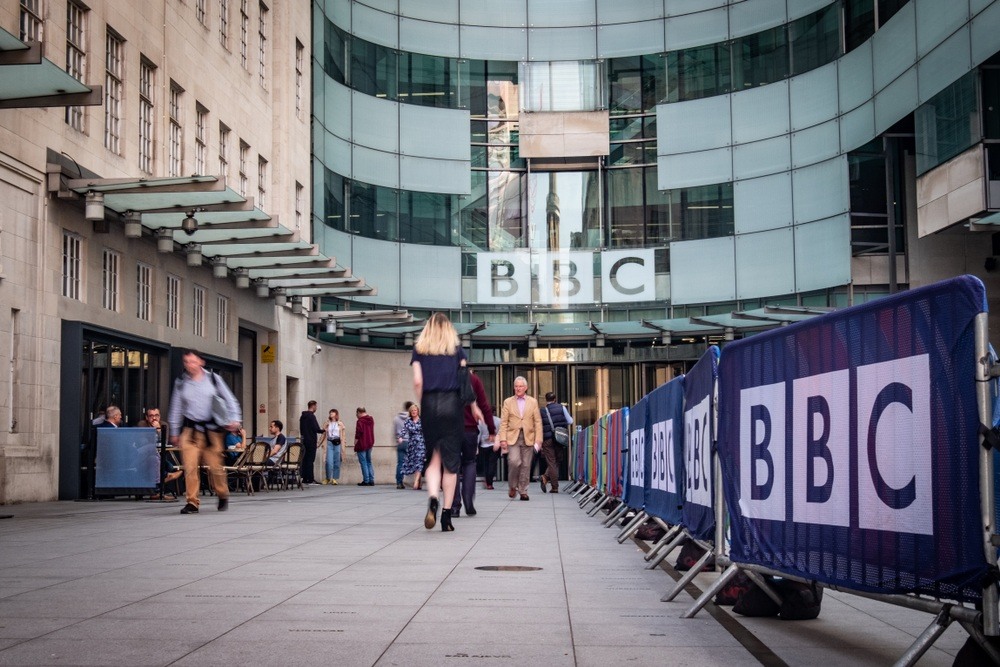
In a move that has sent shockwaves through the worlds of media and international politics, the British Broadcasting Corporation (BBC) is preparing to mount a multi-million dollar defence in a Florida court. Its opponent is not just any plaintiff, but the sitting President of the United States. Donald Trump has filed a staggering $10 billion defamation lawsuit against the publicly-funded UK broadcaster, centring on a single, 12-second edit in a documentary about his political future .
The case, which legal experts are already calling a potential landmark for global press freedom, originates from an October 2024 episode of the BBC’s flagship investigative series, Panorama, titled Trump: A Second Chance? . The legal and political firestorm it has ignited threatens not only the BBC’s finances and reputation but also sets a dramatic precedent for how world leaders interact with a critical international press.
The “Bad Edit” That Started It All
At the heart of the controversy is a seemingly straightforward editing decision that has had monumental consequences. In his January 6, 2021, speech, President Trump told supporters, “We’re going to walk down to the Capitol, and we’re going to cheer on our brave senators and congressmen and women” . Nearly an hour later in the same address, he stated, “And we fight. We fight like hell” .
The Panorama documentary compressed these two quotes, presenting them as a single, continuous statement: “We’re going to walk down to the Capitol… and I’ll be there with you. And we fight. We fight like hell” . The edit omitted intervening material, including Trump’s call to protest “peacefully and patriotically,” which critics argue created the “mistaken impression” that he made a direct, immediate call for violent action on that fateful day .
Immediate Fallout and Political Pressure
The error, which went unnoticed for over a year, was exposed by a leaked internal BBC memo in late 2025 . The scandal triggered a political crisis for the broadcaster, leading to the immediate resignations of its two most senior leaders: Director-General Tim Davie and Head of News Deborah Turness .
President Trump’s legal team pounced, sending a pre-action letter in November demanding a retraction, an apology, and compensation . The BBC swiftly issued a public apology, with Chairman Samir Shah sending a personal letter of regret to the White House and confirming the documentary would never be rebroadcast . However, the corporation refused to pay any compensation, stating it “strongly disagree[s] there is a basis for a defamation claim” . Unsatisfied, Trump filed his historic lawsuit on December 15, 2025 .
The BBC’s Billion-Dollar Defence: A Legal Minefield
The BBC has declared it will “defend this case,” but it faces a uniquely complex and high-stakes legal battle . Its defence strategy rests on several key pillars that aim to dismantle the lawsuit before a costly trial begins.
The corporation’s legal arguments, as outlined in a letter from First Amendment attorney Charles Tobin, are summarised in the table below:
The High Cost of Principle
Beyond the legal arguments, the BBC faces a severe financial dilemma. Trump ally and Newsmax CEO Chris Ruddy estimates that defending the case in court could cost the BBC between $50 million and $100 million in legal fees, whereas a settlement might be reached for a fraction of that . For a broadcaster funded by the British public through a licence fee, the prospect of spending vast sums—win or lose—is a public relations nightmare .
“This is about the BBC’s independence,” argued former BBC Radio controller Mark Damazer. “Unlike American media organisations which have coughed up the money, the BBC doesn’t have commercial business interests that depend on President Trump’s beneficence” .
A Global Spotlight on “Lawfare” and Press Freedom
Many observers see this case as less about legal victory and more about political strategy—a form of “lawfare” designed to drain resources and intimidate critical media . It is part of a pattern: President Trump has also filed multi-billion dollar suits against The New York Times, The Wall Street Journal, and other outlets in recent months . Some US media companies, like ABC and CBS, have chosen to settle similar suits for tens of millions, despite legal confidence they could win .
For the BBC, the stakes could not be higher. The lawsuit arrives at a moment of profound vulnerability, with no permanent director-general and the UK government beginning a fundamental review of its charter and funding model . How it handles this confrontation will define its global reputation for independence for a generation.
As media lawyer Mark Stephens told CBS News, the president’s case is “ill-founded and almost bound to fail” on legal grounds . But in the court of public opinion and political pressure, the battle has only just begun. The world now watches to see whether one of the globe’s most respected broadcasters will stand its ground or be forced to pay a historic price for a 12-second mistake.
Robert Hine ShowbizzToday.com