

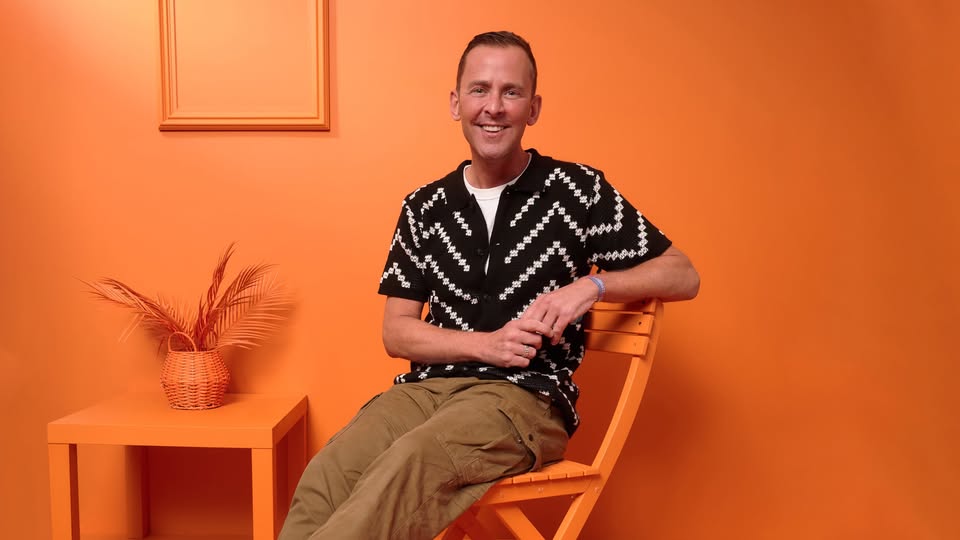
When I first heard that Scott Mills was off the Radio 2 Breakfast Show, I did what any presenter would do. I checked the news. I called a mate at Broadcasting House. I waited for the “temporary” to become “he’s just on holiday.”
But that was last Wednesday. And this is Monday.
And this morning, the BBC confirmed what we all feared: Scott Mills has been sacked. Not suspended. Not “stepping back while an investigation takes place.” Fired. Terminated. Gone.
The man who survived 24 years at Radio 1, who moved seamlessly to Radio 2, who finally got the breakfast slot he called his “lifelong dream” just over a year ago—he is out. And the silence from his camp is deafening.
But here’s what I’ve learned since my last report. This isn’t just about Scott Mills. This is about the last week of the man who runs the entire BBC. And the timing is either tragic… or telling.
The Director General’s Final Days
Let me give you a date: this Friday.
That is when Tim Davie walks out of the BBC for the last time as Director General. He has been in the job for nearly six years. He steered the corporation through Covid, through the Huw Edwards scandal, through the Tim Westwood allegations, through a brutal licence fee settlement.
And his parting gift? A front-page crisis.
Katie Razzall, the BBC’s Culture and Media Editor, put it perfectly in her analysis this morning. She wrote that Mills’ abrupt departure is “yet another BBC crisis – the last for the current director general Tim Davie, who leaves the corporation later this week.”
Now, I’ve been in radio long enough to know that timing is rarely an accident. But I don’t think Davie wanted this. Nobody wants their legacy to be “the guy who fired the breakfast DJ on his way out.”
But here’s the uncomfortable truth. Davie has been saying for months that the BBC had learned its lessons from Edwards and Westwood. Last September, he told the Culture, Media and Sport Committee—and I want you to hear these words exactly—“no-one is irreplaceable.”
The chair of the BBC’s board, Samir Shah, went even further. He told MPs: “It doesn’t matter how grand you are, how famous you are, how important you are. If you behave badly and abuse your power, we don’t want you working for the BBC.”
That sounds tough. That sounds like reform. But it’s one thing to say it in a parliamentary committee. It’s another thing to actually fire one of your biggest stars five days before you leave.
And yet, that’s exactly what Davie has done.
What Do We Actually Know?
Now, I need to be very careful here. And so should you.
The BBC’s own news article makes one thing crystal clear: “There is no allegation of criminality.”
Let me repeat that. No criminality. This is not a Huw Edwards situation. This is not a Tim Westwood situation. Edwards is a convicted criminal. Westwood is awaiting trial on rape charges, which he denies.
This is something else.
The article says Mills is “facing claims over his conduct” —but it does not say what those claims are. It says the allegations are “historic” —meaning they relate to a time before his breakfast show, possibly before his time at Radio 2.
And the BBC moved fast. Very fast.
Mills was last on air last Wednesday. By the weekend, he was sacked. That is not the pace of a bureaucratic investigation. That is the pace of an organisation that has seen the legal bills from the Edwards case and decided it will never be slow again.
But speed has its own risks. When you fire someone without explaining why—and the BBC is not explaining why—you leave a vacuum. And vacuums get filled with rumour, with speculation, with the kind of chatter that ruins reputations whether the allegations are true or not.
The Irony of the Reforms
Here’s what keeps me up at night.
After the Edwards scandal, the BBC launched a major review of its culture. It promised to stamp out bad behaviour. It promised that no presenter would be too big to fail.
And on paper, the Mills sacking looks like a success story for that new regime. As Razzall writes: “Davie and the BBC can argue – with some justification – that the departure of Mills shows its new processes and practices are working well. Nobody is too big to be fired, if their behaviour has compromised the BBC.”
That’s the message Davie wants us to take away.
But here’s the problem. We don’t know if Mills’ behaviour did compromise the BBC. We don’t know what he did. We don’t know if the allegations have been tested, or if they’re just serious enough that the BBC’s lawyers panicked.
And without that information, the message isn’t “justice has been done.” The message is “we will destroy your career without telling anyone why.”
That might feel good in the moment. It might satisfy the tabloids. But it sets a dangerous precedent for every other presenter at the BBC—including me.
Scott Mills: The Man Behind the Microphone
Before I go any further, I want to talk about Scott Mills the human being, not Scott Mills the headline.
He started at 16 on Power FM. He joined Radio 1 in 1998. He came out as gay in 2001—not as an activist, but as a normal bloke who happened to fall in love with another man. He built an army of fans on silly features like Innuendo Bingo and his annual Cheddar Emergency.
He moved to Radio 2 in 2022, taking over from Steve Wright. And when he got the Breakfast Show in January 2025, replacing Zoe Ball, he cried on air. I’m not embarrassed to say I cried a little bit too. Because we’d watched him graft for decades. And finally, finally, he got the big chair.
His tenure lasted just over a year.
Six-and-a-half million listeners tuned in every morning. That’s more people than live in Scotland. And now, those listeners are waking up to Gary Davies or Vernon Kay, wondering what happened to the mate they invited into their kitchens.
Where Does This Leave Us?
The BBC has a headache. That’s the word Razzall uses. “Another headache.”
And it’s the right word. Because headaches don’t kill you. They just make it impossible to concentrate.
The corporation is already fighting a war on two fronts: the commercial radio stations nibbling away at its audience, and the government nibbling away at its funding. The last thing it needed was to fire its breakfast DJ in mysterious circumstances.
But here’s the thing. Tim Davie leaves on Friday. A new Director General will walk in next week. And one of their first jobs will be to clean up this mess—either by defending the decision or by explaining why it was a mistake.
We don’t know which yet.
What we do know is that Scott Mills has not spoken. No statement. No tweet. No “I look forward to clearing my name.” Just silence.
And in this industry, silence is never neutral. It’s either the sound of a man lawyering up… or the sound of a man who knows he can’t defend the indefensible.
I don’t know which one it is. Neither do you.
My Final Thought
Before I sign off, I want to say this directly to anyone listening who has worked with Scott Mills, or been managed by him, or been in a green room with him.
If something happened—if he abused his power, if he behaved badly, if he made your working life a misery—then you deserved better. And the BBC was right to act.
But if this is a historic allegation from a consensual relationship, or a misunderstanding blown out of proportion, or a complaint that was never tested in any fair process… then we have just watched a man’s 27-year career end in the dark. And that should trouble every single person who believes in due process.
The BBC says “no-one is irreplaceable.”
That’s true. The music will keep playing. The adverts will still sell. Another voice will wake you up tomorrow.
But trust? Trust is very, very replaceable. And once it’s gone, it’s gone for good.
We’ll keep asking. You keep listening.
Back to the music….
BY BOB SHERMAN