

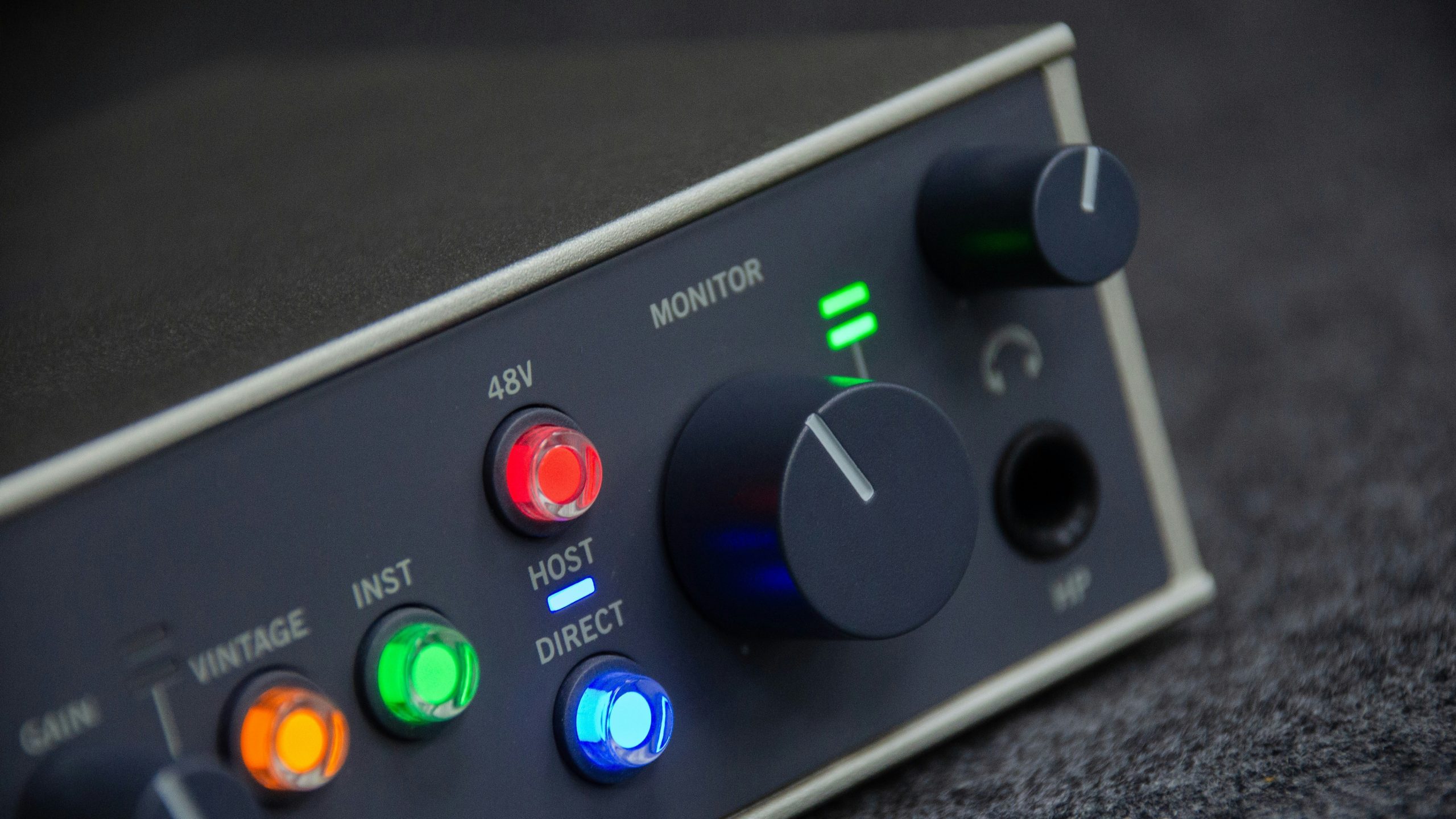
Selecting microphones for a studio is an exciting and addictive activity. However, it is important to remember that they need amplification, which will largely determine the initial sound. A preamplifier (also known as a preamp) can either emphasize the strengths of a microphone or negate them. So today we’re going to talk about choosing a microphone preamplifier and its features. This guide is intended for those who are just starting to work with sound and are setting up or planning their own recording studio. Let’s get started!
What is a microphone preamplifier?
It is a device that amplifies the weak signal coming from the microphone to a line level for further transmission to the power amplifier and monitors. Most audio devices work with a line (analog) signal. A preamp is a kind of intermediary between the microphone and other equipment. Let’s imagine this scheme as follows: microphone + preamplifier + recording device.
In addition to their main task of amplification, many preamps also adjust other parameters of the microphone signal. For small studios, such devices will be more convenient, but more difficult to connect to other equipment.
How to choose interesting and exciting games? Find out here – https://casino.click/
How does a preamp differ from an audio amplifier?
These two devices have a common task – sound amplification, but that’s where the similarities end. A preamp amplifies a weak microphone signal at the input and brings it to line level, while a Hi-Fi amplifier takes a line signal and increases its output power for transmission to the speaker system.
Inputs and outputs
Any preamp has a microphone input and a line output — usually with balanced XLR connectors, which are often combined with 6.3 mm for greater connection versatility. These devices also have Hi-Z and line inputs for connecting and recording musical instruments: electric or bass guitars, synthesizers, and others.
The number of microphone inputs on preamps varies, but single-channel and dual-channel models are more common for connecting one or a pair of microphones. There are also four-channel, eight-channel, and even more “capable” preamps. Usually, the number of inputs corresponds to the number of outputs, but there are other options. For example, when a single-channel preamp has two outputs that allow the signal to be split: one sent directly to the recording device, and the other passed through a compressor, equalizer, and other equipment.
Tube
Vacuum tubes are responsible for amplifying the signal in these devices — this design appeared at the dawn of sound recording and is still used today. Oddly enough, tube devices are loved for their imperfections. The tube adds more nonlinear distortion to the sound, which the human ear perceives as “warmth” and softness. Such preamps often have very pronounced midrange frequencies and slightly compressed highs and lows. However, a lot will depend on the tubes used and the characteristics of the amplifier stage. Devices with this design will give the microphone a vintage sound color that is appropriate for recording vocals or musical instruments when a soft and smooth sound is desired.
Transistor
A more advanced design compared to tube. Solid-state (transistor) devices have a more accurate and clean sound — they have a low level of nonlinear distortion. Such preamps can withstand high sound pressure and perfectly transmit a wide dynamic range without compression or distortion.
Hybrid
These preamps use both transistor and tube amplification stages. This design combines the strengths of tube and transistor devices — smoothness and excellent sound dynamics. An example of a hybrid preamp is the SimpleWay Audio Vacuum Stereo. It has a minimal level of nonlinear distortion (only 0.002%) and a signal bandwidth of up to 100 kHz for recording the wide dynamic range of musical instruments.
Preamp functions
In addition to gain control, microphone preamps have additional controls and functions that are useful during recording. There are Channel Strip devices on the market that combine a preamp, compressor, equalizer, attenuator, and other devices. One such device allows you to precisely adjust the sound parameters before it enters the working program and can replace an entire rack of equipment. However, individual studio equipment units (compressors, equalizers, etc.) are often better in terms of quality.