

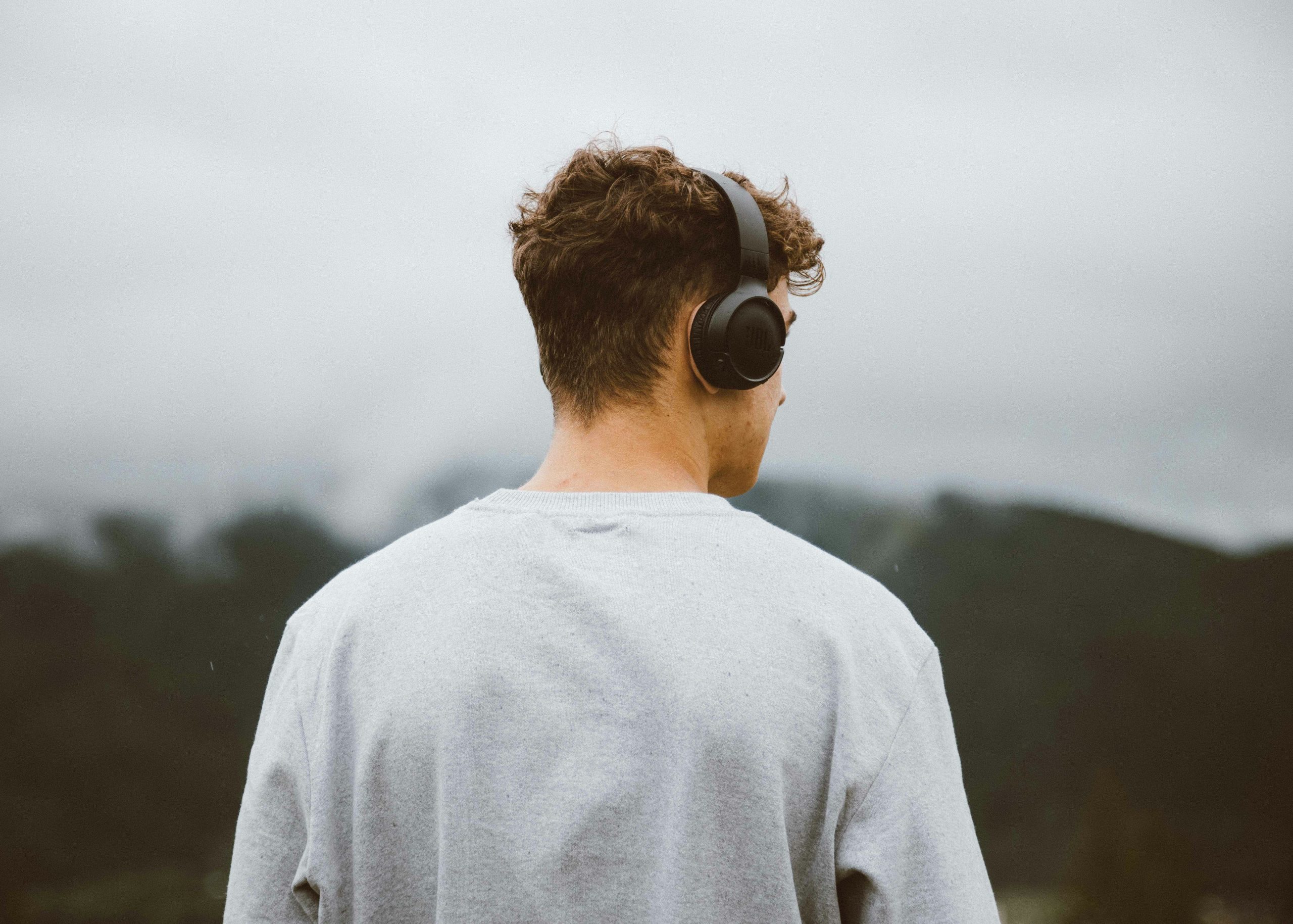
Unlike the phonograph, headphones cannot claim to have a single inventor. Instead, their development has been a continuous process of experimentation and refinement that began in the late 19th century. Early models were neither attractive nor comfortable and had poor mono sound quality.
However, these modest beginnings gave rise to a number of amazing wonders of Hi-Fi, wireless communication, and noise cancellation that we enjoy today. Today, we will outline the history of headphones — a gadget without which it is difficult to imagine modern life. Due to the breadth of the topic, we have selected only the most interesting stories to fit them into this article. Let’s go in chronological order. A stylish bonus awaits you at the end of the article.
Late 19th century: the first personal headphones appear
In 1878, the first patent for an electrodynamic transducer (speaker) was filed, which marked the beginning of the development of acoustic systems. It didn’t take long for people to realize that what one person enjoyed listening to was annoying to another. Soon after, technologies for using speakers for personal purposes followed.
And we have unique games for thrill seekers – free spins social casino
The first use of speakers that could only be heard by one person in a room had practical and professional applications. Telephone operators in the early 1880s began using individual headphones. This allowed multiple people to talk on the phone in the same room without disturbing each other. Logically, the next step was headphones for listening to music. This happened in the 1890s, when the Electrophone company used headphones to transmit music from London opera houses to paying subscribers. People listened to concerts on their own telephone lines. Subscription-based music transmission? It’s reminiscent of modern streaming services, isn’t it? As we know, everything new…
The devices of that time were nothing like modern headphones. Firstly, they were not worn on the head. This was impractical due to the heavy weight of the first personal listening systems. The headphones used by telephone operators weighed more than 4 kilograms and rested on the listener’s shoulders. The device used by Electrophone for listening to music resembled a medical stethoscope.
1920-1950: the first Beyerdynamic and Koss
The next major innovation in the history of headphones came from Germany. In 1924, a young engineer named Eugen Beyer founded Elektrotechnische Fabrik Eugen Beyer in Berlin to manufacture loudspeakers. By 1937, the company, now known as Beyerdynamic, had released the world’s first dynamic headphones, the DT 48. These headphones provided much higher volume and better sound than Baldwin’s radio headset. Beyerdynamic headphones retained the basic design of the Radio Head-Set, but significantly improved wearing comfort. The DT 48 was such a leap into the future that they are still in production today, with minor modifications and improved sound.
The first open headphones
In 1969, the Sennheiser HD 414 appeared on the market, a model in which the cups behind the speaker were not covered with an impermeable cover. The open design makes the sound even more realistic and dynamic, as the waves are distributed evenly. The soundstage became larger and more natural, which is why sound engineers still prefer to work on mixing with open headphones alongside studio monitors.
Bluetooth in the 2000s and today
Wireless headphones are extremely popular now, but let’s remember how it all began. Bluetooth technology was patented in 1999, but at first it was not music lovers who fell in love with it, but businesspeople. The typical successful entrepreneur of the 2000s wore a suit, carried a cell phone, and used a single-channel Bluetooth headset. They looked a little strange and ridiculous. However, in the late 2000s and early 2010s, manufacturers such as Bose and Beats began to produce Bluetooth headphones with a more classic and fashionable appearance.