

Showbizztoday.com – February 2, 2026
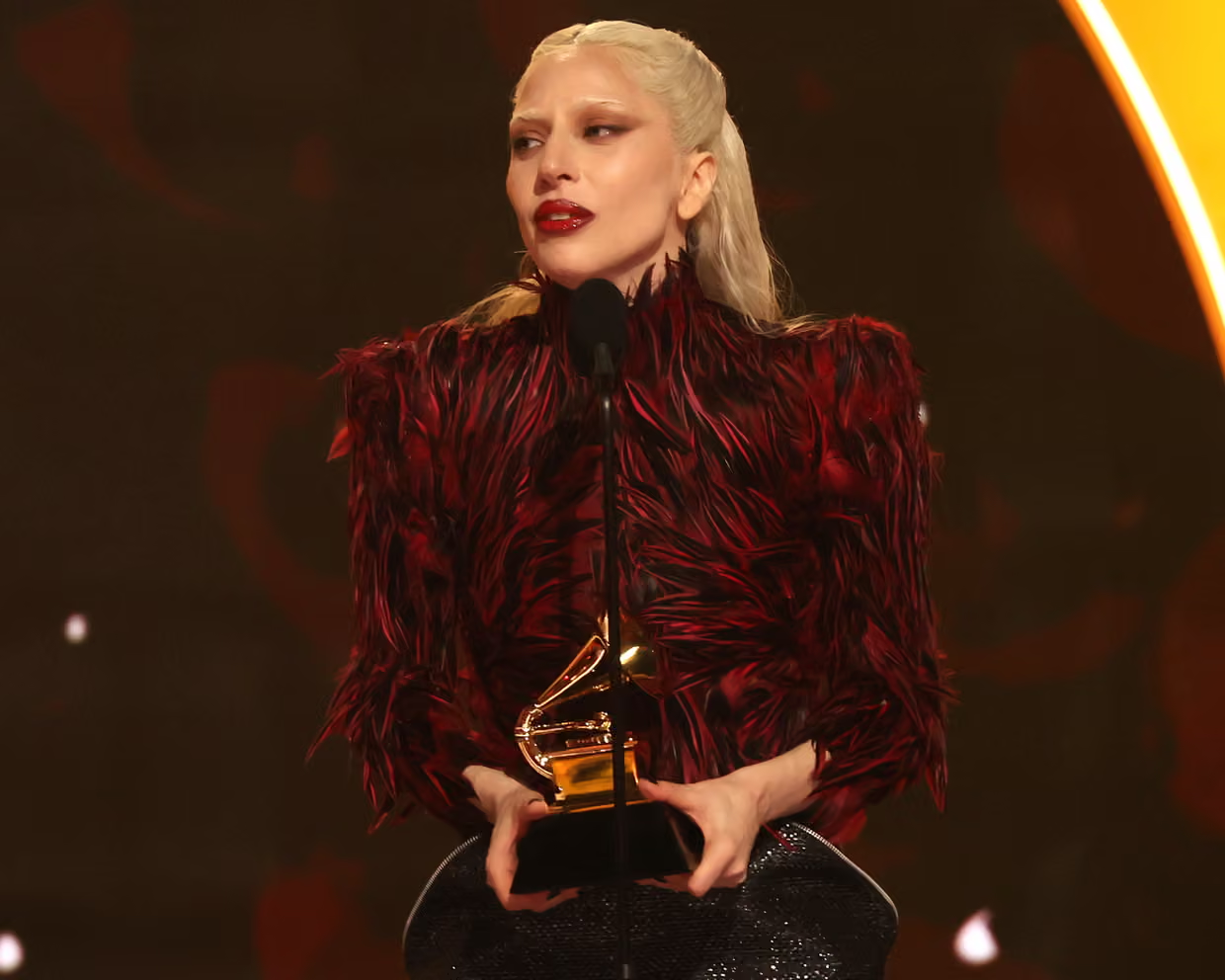
Los Angeles glittered a little brighter on February 1st as music’s biggest names descended upon the Crypto.com Arena for the 68th Grammy Awards. In a night hosted with his signature, whip-smart charm by Trevor Noah for the sixth and final time, the ceremony was a stunning collage of historic firsts, jaw-dropping spectacles, and heart-on-sleeve political declarations. It was a show that proved awards can still feel electric, artists still have something to say, and yes, live television remains gloriously unpredictable.
The Major Winners: A Night of Record-Breakers and History-Makers
The biggest trophy of the night went to a genuine watershed moment. Puerto Rican superstar Bad Bunny made history when his album DeBÍ TiRAR MáS FOToS won Album of the Year. This marks the first time a Spanish-language album has ever won the Grammys’ top prize in its 68-year history. In an emotional speech, Bad Bunny dedicated his win to “all the people that had to leave their homeland, their country, to follow their dreams”.
But the king of the night in terms of sheer numbers was Kendrick Lamar. With five wins, he was the most-awarded artist of the evening and cemented his legacy as the most-awarded hip-hop artist in Grammy history, surpassing Jay-Z with an astounding 27 total awards. His collaboration with SZA, “Luther,” won Record of the Year—his second consecutive win in the category.
Other key victories in the “Big Four” categories included Billie Eilish, who won her third Song of the Year award for “Wildflower,” becoming the first three-time winner in that category’s history. Olivia Dean took home the coveted Best New Artist prize, capping off a stellar year.
Here’s a quick look at some of the night’s biggest winners:
The Performances: From Spectacle to Soul
If the awards celebrate what happened in the past year, the performances reminded everyone why music matters right now. The stage saw everything from intimate piano ballads to literal car crashes.
Tyler, the Creator delivered what many are calling the performance of the night: a dizzying, cinematic saga that saw him, as one character, drive a red sports car into his other character, before ending by blowing up a gas station with himself inside. Sabrina Carpenter brought pure, chaotic fun, sliding in on an airport baggage carousel for “Manchild” and pulling a dove from a magician’s hat. And Lady Gaga transformed the arena with a stark, “disco-punk” rendition of her hit “Abracadabra,” complete with a giant wicker eyeball headpiece.
The other end of the spectrum was just as powerful. Justin Bieber delivered a stunningly vulnerable performance of “Yukon,” stripping the production down to a single guitar loop and his raw voice. And Lola Young moved the room to a standing ovation with a stripped-back, piano-only version of her hit “Messy”—a triumphant return after a recent health scare.
The Tribute: A Masterclass in Musical Reverence
The In Memoriam segment was, by consensus, one of the most powerful in Grammy history. It paid extended, loving tribute to three giants we lost. Post Malone was joined by rock royalty Slash, Duff McKagan (Guns N’ Roses), Chad Smith (Red Hot Chili Peppers), and producer Andrew Watt for a ferocious, full-throated run through Black Sabbath’s “War Pigs” in honor of the great Ozzy Osbourne.
Then, in a breathtaking transition, the spotlight turned to R&B and soul. Lauryn Hill, making her first Grammys appearance since 1999, led an all-star tribute to D’Angelo and Roberta Flack. The stage saw legends like John Legend, Chaka Khan, Jon Batiste, and Lucky Daye perform classics like “Brown Sugar” and “Killing Me Softly,” culminating in a moving Fugees reunion between Hill and Wyclef Jean. It was a true celebration of musical lineage.
The Moments: Unscripted, Unforgettable, and Unfiltered
Beyond the trophies and the choreography, the Grammys are made of moments—and 2026 had plenty.
Political Passion: The night carried a strong undercurrent of activism. Bad Bunny, before thanking anyone in his acceptance speech, used his platform to declare “ICE Out,” receiving a roaring standing ovation. Billie Eilish, in her Song of the Year speech, affirmed that “no one is illegal on stolen land”. Many artists, including SZA, wore “ICE Out” pins on the red carpet, making their stance visible.
Cher’s Confusion: In a moment only Cher could deliver, the icon—fresh off receiving a Lifetime Achievement Award—was called back to present Record of the Year. She initially fumbled, announcing “Luther Vandross” as the winner (the song “Luther” samples the late soul legend). After some gentle help, she correctly awarded it to Kendrick Lamar and SZA, creating a hilarious and oddly perfect slice of live TV.
A Host’s Farewell: Trevor Noah, after six years, signed off as host with his usual wit and warmth, leaving big shoes to fill. He even helped cover for Bad Bunny, who is contractually obligated not to perform before the Super Bowl, by leading an impromptu singalong of “DtMF” to the star’s delight.
As the night closed, the message was clear. The 2026 Grammys weren’t just about who won; they were a vibrant snapshot of music’s power to break barriers, honor legends, and reflect the world around us—all with a healthy dose of spectacular, unpredictable fun.
by Eric Shannon