

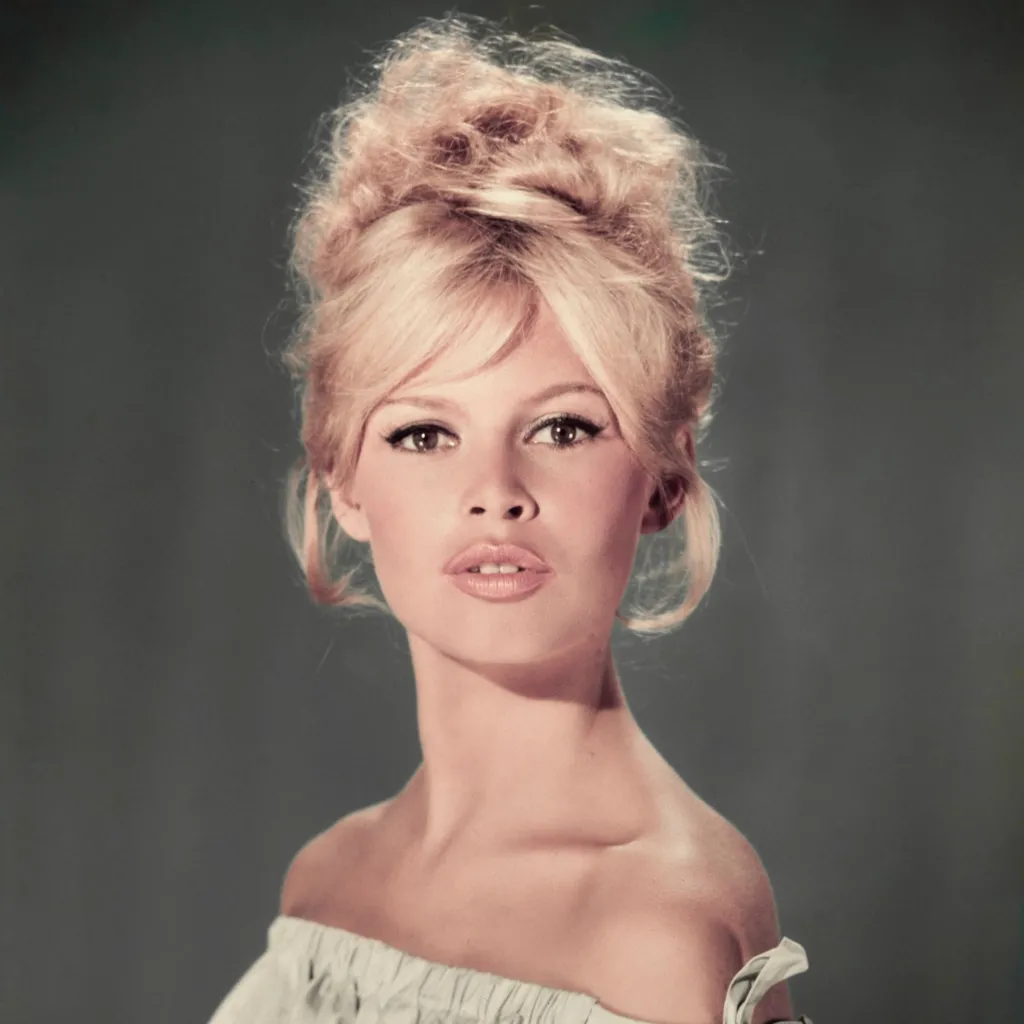
The news from Saint-Tropez came on a quiet Sunday, December 28, 2025, a final scene delivered not with a bang but with the closing of a door. Brigitte Bardot, the French icon whose name was once synonymous with the very breath of freedom, had died at her home at the age of 91. With her, an entire epoch of cinema and cultural rebellion seemed to slip into memory. Yet, to remember Bardot only as the tousled blonde in the bikini is to miss the point of her life entirely—a life defined not by the glamorous cage she escaped, but by the complex, controversial refuge she built in its place.
Her death, confirmed by a spokesperson for the Brigitte Bardot Foundation for the protection of animals, was peaceful. The cause was not disclosed. The tributes flowed from the highest offices; French President Emmanuel Macron wrote simply, “We are mourning a legend”. But the truest monument to Bardot is not in official statements, but in the two irreconcilable halves of her story: the international sex symbol who could not bear to be looked at, and the militant activist who demanded to be heard.
The Birth of a Myth: ‘And God Created Woman’
It is impossible to overstate the cultural atom bomb that was her 1956 film, And God Created Woman. Directed by her then-husband Roger Vadim, it was a directorial debut designed as a showcase for Bardot’s “provocative sensuality”. As Juliette, a hedonistic orphan in sun-drenched Saint-Tropez, Bardot didn’t just act—she existed with a natural, unapologetic physicality that shattered conservative norms. Scenes of her dancing barefoot or sunbathing nude were not just risqué; they were a declaration of independence for the female form.
The film was a box-office phenomenon, “breaking French cinema out of U.S. art houses and into the mainstream”. It made Bardot, at 22, a superstar and, as the Criterion Collection notes, an international star who “revolutionized the foreign film market”. Her pout, her waist, her mane of blonde hair became the blueprint for a new kind of female allure: wild, untamed, and entirely self-possessed. In 1969, her features were literally cast in stone as the model for “Marianne,” the national emblem of France.
The Crushing Weight of the Gaze
Paradoxically, the woman who symbolized liberation felt profoundly trapped by her own image. “It’s an embarrassment to have acted so badly,” she later said of her early films. “I was really treated like someone less than nothing”. The relentless, invasive attention of the paparazzi—who once broke into her home to photograph her during pregnancy—shattered her. She described the experience as “inhuman”.
Her personal life mirrored this turmoil. A “difficult” childhood under a strict father gave way to a chaotic adulthood of multiple marriages and a profoundly troubled relationship with motherhood. She described her pregnancy as feeling like “a tumor growing inside me” and later gave up custody of her only son, Nicolas. The pressure culminated in a suicide attempt. The sex symbol, it turned out, was a deeply wounded soul. “I was never really prepared for the life of a star,” she confessed.
The Second Act: A Warrior for the Voiceless
In 1973, at the peak of her fame, Bardot performed her ultimate act of defiance: she walked away. At 39, she retired from cinema, declaring her career over. But retirement was not an end; it was a furious rebirth. She redirected the immense force of her fame toward a new cause: animal rights.
This was no celebrity vanity project. Bardot became a militant activist. She traveled to the Arctic ice floes to protest the commercial seal hunt, a campaign for which she is vividly remembered in Canada. She sold her jewelry and movie memorabilia to fund what would become her life’s work: the Brigitte Bardot Foundation. Her advocacy was uncompromising and wide-ranging, targeting bullfighting, fur farming, and whaling. “I don’t care about my past glory,” she told The Associated Press in 2007. “That means nothing in the face of an animal that suffers, since it has no power, no words to defend itself”.
In this crusade, she found a purpose that stardom never provided. As one tribute noted, she used her celebrity to insist that animal cruelty was “a serious moral and political issue,” forcing it into mainstream debate.
The Final, Fracturing Controversy
However, Bardot’s fierce, singular passion increasingly curdled into something darker. Her animal advocacy became entangled with vehement anti-immigrant and anti-Muslim rhetoric. She was convicted and fined five times by French courts for inciting racial hatred, with one conviction stemming from a 2006 letter where she wrote of being “led by the nose by this population that is destroying us, destroying our country”.
Her 1992 marriage to Bernard d’Ormale, a former adviser to far-right National Front leader Jean-Marie Le Pen, cemented her political shift. Her statues as Marianne were removed from French town halls. The icon of liberation had become a polarizing figure embraced by the far-right, which hailed her as “incredibly French”.
A Legacy of Unflinching Extremes
How, then, do we reconcile Bardot? She was a paradox: the ultimate object of desire who rejected the desiring gaze; a symbol of national pride who railed against her nation’s evolution; a voice for the utterly vulnerable who wielded her words as weapons against the vulnerable.
Perhaps reconciliation is not the point. Brigitte Bardot lived her entire life at an extreme, first of beauty and then of conviction. She refused to be what the world wanted her to be, whether that was a docile starlet or a quiet retiree. She traded one form of notoriety for another, choosing a life of noisy, uncomfortable, and often unpopular battle over one of quiet, gilded irrelevance.
Her legacy is not a smooth narrative of growth, but a jagged testament to a woman who could not be contained—not by studio contracts, not by public expectation, and certainly not by polite society. She was, to the very end, wholly and unapologetically herself. In a world that constantly asks its icons to conform, that may be her most revolutionary act of all.
BY J D THOMAS