

Showbizztoday.com Exclusive
Hollywood has seen its share of epic fights: the auteurs versus the studios, the streamers versus the theaters, good taste versus the Kardashians. But the most consequential battle for the future of entertainment in 2025 isn’t being fought in a Los Angeles boardroom or on a New York red carpet. It’s being waged in a Florida courtroom, with the entire concept of a free press in the crosshairs.
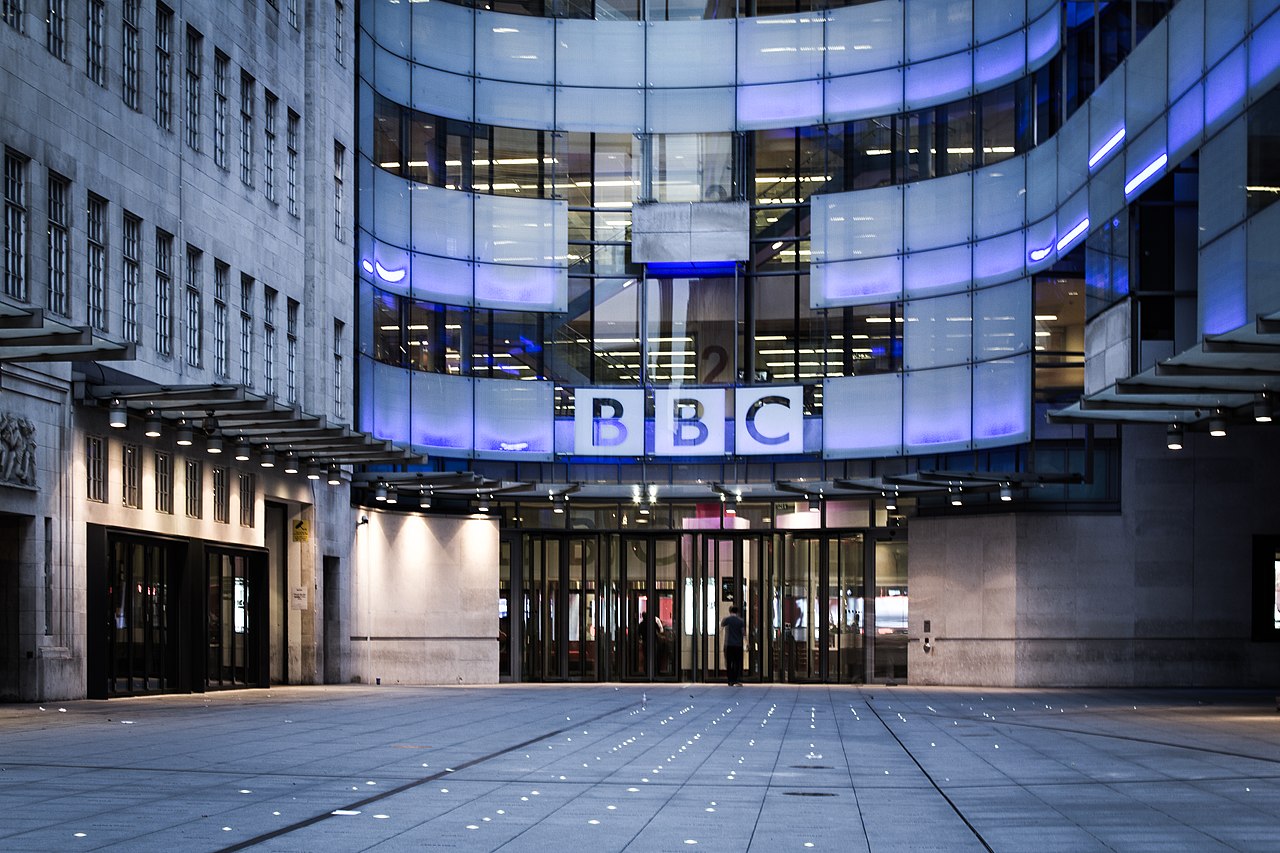
The defendant is an unlikely one: the British Broadcasting Corporation. The plaintiff, however, is a figure who has turned litigation into a performance art: Donald J. Trump. The former and, as of last month, once-again President of the United States has filed a staggering $10 billion defamation lawsuit against the U.K.’s public broadcaster. The cause? A 12-second edit in a 2024 documentary.
The instinct for any massive corporation, faced with a politically radioactive, astronomically expensive lawsuit from the most powerful man in the world, would be to settle. Write a check, issue a vague statement, and make it go away. Disney, the parent company of ABC and ESPN, has mastered this art. Yet, the BBC has done the unthinkable: it has chosen to fight.
The question hanging over global media isn’t whether the BBC can win. It’s whether, in 2025, it should. In an era where truth is negotiable and attention is currency, is a principled stand against the world’s most prolific filer of lawsuits a noble last stand for journalism, or a catastrophic misstep that could bankrupt a beloved institution?
The “Bad Edit” That Started a War
The offending footage is from the BBC’s flagship investigative series, Panorama. In an October 2024 episode titled Trump: A Second Chance?, the program examined his path to a potential second term. To condense a lengthy January 6 speech, editors spliced two clips.
The first showed Trump saying, “We’re going to walk down to the Capitol…” The second, taken from a different part of the speech, showed him saying, “And we fight. We fight like hell.” The edit omitted intervening words, including his call to protest “peacefully and patriotically”.
For over a year, this edit went unnoticed. Then, in late 2025, an internal BBC memo was leaked, exposing the error and triggering a firestorm. The corporation moved quickly: the Director-General and Head of News resigned, Chairman Samir Shah sent a personal letter of apology to the White House, and the documentary was permanently pulled from circulation.
For Trump, the apology was not enough. His legal team sent a demand for retraction and compensation. The BBC refused to pay. The $10 billion lawsuit was filed on December 15, alleging “massive economic damage to his brand value”.
The BBC’s Billion-Dollar Gamble: A Cost-Benefit Analysis of Principle
To understand the BBC’s gamble, you have to understand its unique position. It is not a commercial network like Fox or CNN. It is funded by a mandatory license fee paid by British households, a tax for public broadcasting. Its mandate is to inform, educate, and entertain—not to turn a profit. This insulates it from market pressures but makes it acutely vulnerable to political ones.
“The BBC doesn’t have commercial business interests that depend on President Trump’s beneficence,” noted former BBC Radio controller Mark Damazer, highlighting a key difference from U.S. media giants that have settled with Trump.
The BBC’s defense rests on several pillars. Legally, it argues the edit was a regrettable error, not an act of “actual malice,” the high bar for defaming a public figure. Practically, it notes the documentary was geoblocked for U.K. audiences only. And perhaps most compellingly, it points out that Trump won re-election and increased his vote share in Florida, the very state where the suit was filed, questioning the premise of “damage”.
Yet, the financial reality is terrifying. Trump ally Chris Ruddy estimates a court fight could cost the BBC $50 million to $100 million in legal fees alone. For an organization whose entire budget is scrutinized by the public, the prospect of writing that check for a “principle” is a public relations nightmare of its own.
The Ghost of Rob Reiner and the High Cost of 2025
The BBC’s decision feels even more stark against the backdrop of Hollywood’s year. 2025 has been a year where the line between celebrity and tragedy, spectacle and substance, has been violently blurred.
The community is still reeling from the murder of legendary director Rob Reiner and his wife, Michele, a crime that left the industry heartbroken and horrified. In a poignant Christmas Day essay for The New York Times, Martin Scorsese paid tribute to his friend, writing not just of his talent, but of their shared bond as New Yorkers in Hollywood, of dinners, and of laughter now forever silenced. Scorsese’s grief was a raw, human counterpoint to the year’s garish headlines.
And what headlines they were. We watched Katy Perry float in zero gravity, singing “What a Wonderful World” on Jeff Bezos’s Blue Origin rocket. We followed the “Coldplay KissCam Drama,” where a 16-second viral clip from a concert led to two high-powered resignations and a surreal PR campaign starring Gwyneth Paltrow. We celebrated Taylor Swift’s engagement to Travis Kelce and mourned the death of Ozzy Osbourne. We witnessed Lily Allen’s blistering musical comeback, allegedly detailing her ex-husband’s infidelity with the help of Dakota Johnson on SNL.
Through it all, the machinery of showbiz turned. The Stranger Things finale dominated streaming. A teaser for a John Madden biopic starring Nicolas Cage dropped on Christmas Day. Jordyn Woods got engaged to NBA star Karl-Anthony Towns. The Kardashians built their annual gingerbread mansion, this year with Timothée Chalamet figurine included.
It was business as usual in the empire of entertainment. A mix of joy, scandal, loss, and absurdity, all packaged for consumption. In this world, the BBC’s lawsuit is an alien artifact. It’s not fun. It’s not glamorous. It’s a dreary, dangerous, and wildly expensive matter of law and governance.
So, Why Fight?
Because someone has to.
The BBC is betting its reputation and a chunk of its treasury on the idea that some lines cannot be crossed, even for convenience. If a head of state can financially bludgeon a foreign news organization over a corrected error, it sets a precedent that would have a chilling effect on global media. Other outlets would look at the BBC’s ruinous legal bills and think twice about any investigative piece touching on power.
“This is about the BBC’s independence,” Damazer argued. That independence is what allowed it to break stories like the Jimmy Savile scandal, holding its own country’s establishment to account. That independence is now on trial.
The case may be “ill-founded and almost bound to fail,” as media lawyer Mark Stephens told CBS. But in the process, Trump wins by forcing the BBC to spend millions, draining resources from the journalism it exists to produce. It’s a form of “lawfare”—using the legal system not to win, but to wage war.
This Christmas, as Martin Scorsese remembered his friend and Katy Perry looked down at Earth from the stars, the BBC’s board made a cold calculation. They decided that the cost of fighting, however high, is lower than the cost of surrendering. They are fighting not just for 12 seconds of footage, but for the next 12 minutes, the next 12 hours, and the next 12 years of journalism.
In a year of spectacle, it is the least showy, most human decision imaginable. It is the decision to stand up. Whether it is also the last stand for a certain kind of public service remains the biggest story of the year, one that won’t be resolved in a celebrity tweet or a teaser trailer, but in the quiet, grinding gears of justice.